
Tech Tip - Alternator
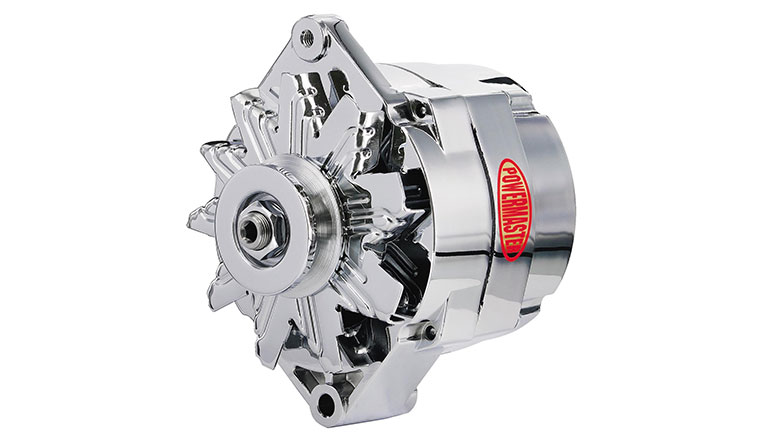
Alternators purpose:
To maintain the charge of the battery and supply current for the accessory loads. Alternators should not be used as battery charger or to recharge a dead battery. This will damage the alternator.
Idle amperage vs. max output:
Most alternators are advertised as max output. Be sure to choose your alternator based on idle and cruise amperage, this is where most of your vehicles time will be spent.
How much Hp does an alternator draw:
Roughly 50amps of vehicle current draw equals 1hp. If your vehicle draws 150amps worth of current and the alternator is large enough to supply this draw you will have roughly a 3hp draw.
Do alternators charge in either direction?
Yes and NO. All of our alternator will charge in either direction but some are better suited for the job due to cooling fan arrangements.
Can too much amperage be bad?
No the only time you will run into issues is with not enough. The alternator will only produce what the vehicle is asking for. Example you purchase a 150amp alternator and the vehicle only has 80amps worth of peak draw, the alternator will only produce those 80amps under normal circumstances. As long as all of your original wiring is in good shape and not being placed under extra loads there is nothing to worry about.
1 wire alternators:
Yes that easy! They need 1wire from the alternator charge post directly to the battery or battery side of the starter solenoid. Provided the alternator has a good housing ground and proper belt tension this is all you need.
Turn on:
1wire alternators have seen the same benefits from technology as other daily used electronics. Most no longer need to be “Revved up” to be excited provided it is the correct unit for the application. This will only hold true to a system with a less than ideal pulley ratio. (See ratio chart)
Good voltage:
We offer alternators compatible for 12/14/16V systems. On a 12V system the battery should read 12.6 to be fully charged. Running voltage should ideally be 13.8-14.8V. 14V batteries should read 14.6V fully charged. Running voltage needs to be in the 16-16.8v range. 16v batteries should read 16.8v fully charged
Checking output:
Never disconnect the positive or negative battery cables while the engine is running. This was an “old school” way of checking the charging system that will damage the internals of your new alternator if done.
Fusing/Circuit breakers:
While fusing or circuit breakers are not mandatory some choose to use them. Make sure when choosing to do so that the fuse or circuit breaker is capable of handling the amperage load being place on it.
Crimp vs. Solder:
We recommend a good crimp over soldered power and ground wires. The crimp will be much more robust in an automotive application. If any wires are frayed or corroded this is the time to replace them.
Belt and tensioner:
It is a good time to inspect your drive belt when installing your new alternator. If the belt is cracked, worn, contaminated with fluid (oil, antifreeze, grease) replace with a good quality made belt. This is also a good time to check any automatic tensioner and idle pulleys for excessive wear. If using a manual tensioner make sure to tighten the belt according to our directions on the pulley tag. This way may be different than what you are accustomed to but this is not your average alternator.